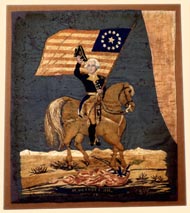
Gentelman I herd you wanted old relickes of the war, for your building. I had the first American flag that was raised in Richmond April 3, 1865 when the northern calvery was comming down Main St. on horse back. Stevans was the gentleman that halted at my house, and saluted the flag...it was a piece of needel worke I did in the year 1855...the piece is Generell Washington...holding aloof the American flag, while his horse is trampling the British flag...I would not dispose of it but I need monne...I am a widow lady.
First Union Banner displayed in Richmond, Virginia, when federal troops entered the city in 1865 (CHS 1920.1262).
Why did Charles Gunther amass a collection of Lincoln assassination relics?
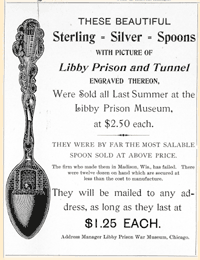
Charles Gunther was a quintessential Chicago businessman. His savvy marketing of the Lincoln relics and the Libby Prison War Museum was designed to appeal to an audience of aging Civil War veterans who became financially and politically established in Chicago's postwar boom. A contemporary noted:
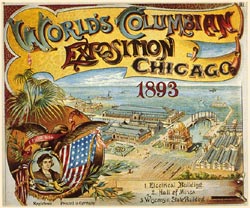
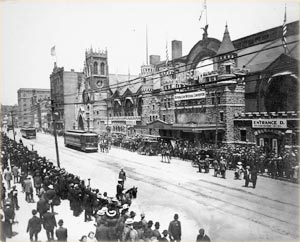
A close alliance of Chicago capitalists and cultural activists created museums, libraries, concert halls, and a university to prove that their town was "something more than a centre of pig-sticking and grain-handling." Consortiums of Chicago businessmen offered stock options to finance major civic improvements beginning with the 1889 Auditorium complex, the largest private building in America, and culminating in the spectacular 1893 World's Columbian Exposition. (MILLER 354) Gunther's Libby Prison War Association was already dismantling the Richmond prison in the summer of 1889 when a Chicago citizen's committee formed to secure the World's Fair; the Libby Prison War Museum's opening gala took place in September 1889, one month prior to the Auditorium's. Tourists from the Columbian Exposition flocked to the Libby Prison War Museum, but Gunther was already attracting hundreds of thousands of visitors, including out-of-state tourists, before construction of the fair had even begun.
The Lincoln collection facilitated Gunther's political ambitions.
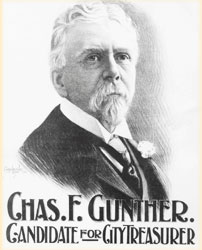
Charles Gunther served as alderman of Chicago's second ward from 1897-1901, which included the socially prominent Prairie Avenue neighborhood, and city treasurer from 1901-1905. In a city swollen with immigrants and a fear of foreigners, Gunther's Lincolniana helped the German-born Confederate veteran establish an identity as a patriotic American. The collection also appealed to middle- and upper-class Chicagoans during a period of social, political, and economic upheaval characterized by the 1894 Pullman strike and the assassination of Mayor Carter Harrison. When Gunther's collection was purchased by the Chicago Historical Society in 1920, registrar Catherine McIlvaine noted:
The Americana in the collection is the greatest Americanization force that can be assembled merely as propaganda. (ANGLE 185)
Yet Gunther's collection represents more than a commercial and political investment. Public fascination with his Civil War relics and his very success as a businessman greatly enriched his holdings.
News of Gunther's collection spread nationwide as tourists flocked to the Libby Prison War Museum, and he was deluged with offers of Americana that greatly enriched his holdings. An 1889 letter from a woman in Richmond, Virginia is typical:
To the gentelman that bought Libby Prison
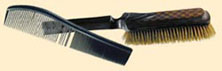
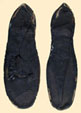
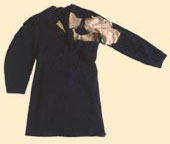
Gunther's treasures included many personal or popular culture items that appealed to a general audience. They are a treasure trove for contemporary historians examining nineteenth-century American material culture. The fascination of Gunther's Lincoln relics stems as much from their every-day quality as from the potency of their association.
Gunther's Lincoln relics, including comb, brush, coat, and rubber overshoes.
In the eyes of many...Libby Prison itself is the priceless part of the museum, as it is indissolubly associated with the memory of 40,000 boys in blue who were confined in it in Richmond during the civil war...There was much suffering on account of the lack of food and clothing, and many deaths from hunger and lack of medical treatment. It is these memories that will live should the bricks and timbers of Libby be scattered the entire breadth of the vast bottom of Lake Michigan. (CHICAGO TRIBUNE 1/8/1899, 26 AND 3/14/1899, 5)
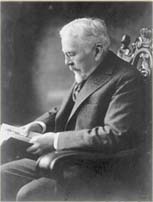
Although he lacked an academic background, Gunther was one of America's most important nineteenth century collectors. Together with curios and forgeries, he managed to acquire and preserve significant treasures that reflected his passion for history. In the words of a contemporary:
He is recognized as a man of the widest catholicity of spirit, to whom all people are a subject of interest and history a field for research. (CURREY 262)
Charles F. Gunther (ICHi-10384).